


Winter entryway storage ideas work best when they control three things at once: wet footwear, bulky outerwear, and the daily flow through your door. A beautiful foyer can become frustrating in one storm if boots block the walkway, gloves disappear, and damp coats have nowhere to dry.
This guide shares 17 practical winter entryway storage ideas for American homes, apartments, and mudrooms. The goal is not to buy a matching collection of organizers. It is to create a simple landing zone that fits your space, your climate, and the number of people who use the door.
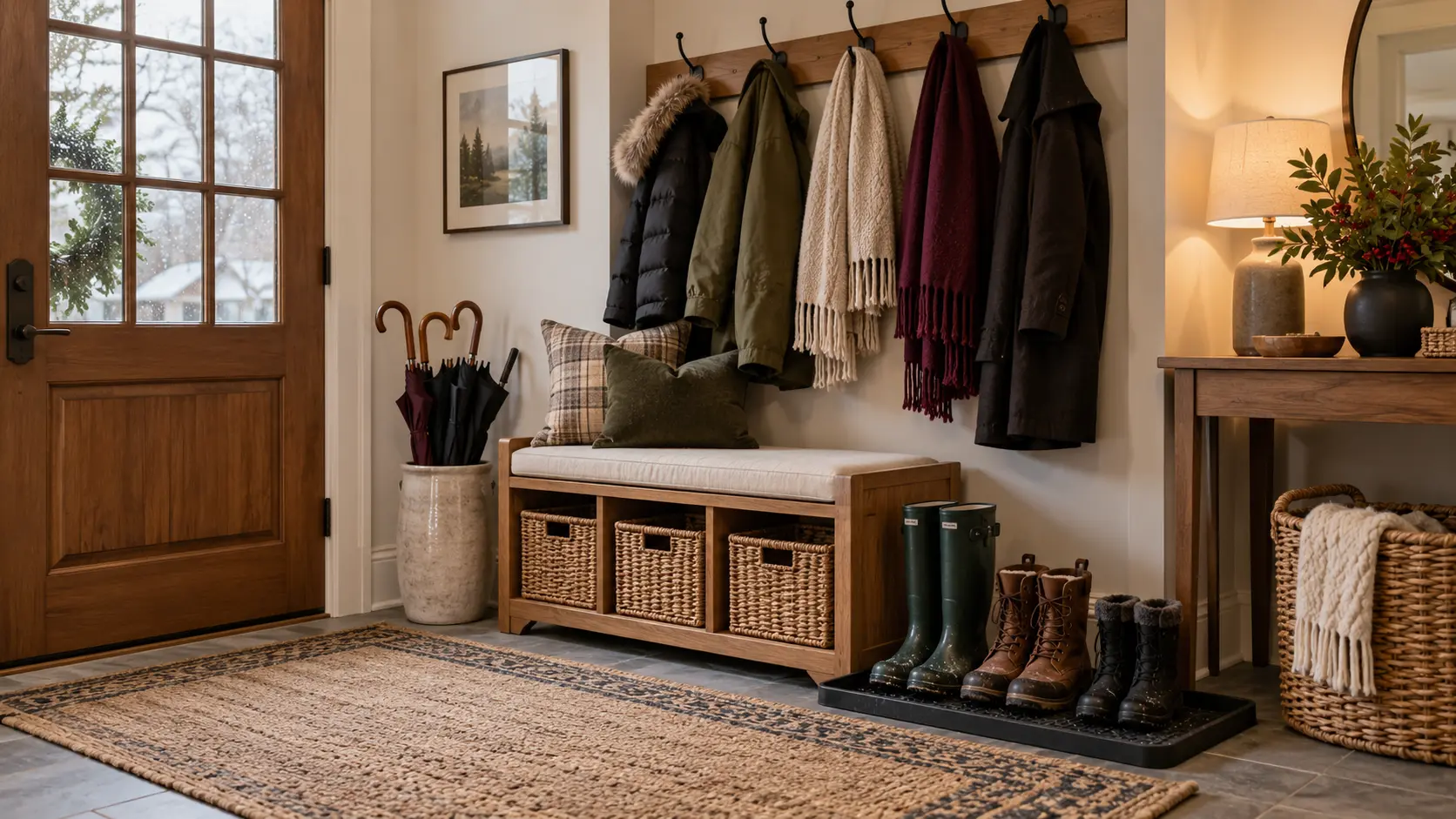
Start by removing off-season items, measuring the door swing, and noting where water actually lands. Then choose only the solutions that address a real problem. If the area already feels crowded, use the house hushing decluttering method before adding more storage.
Winter Entryway Storage Ideas: Quick List
- Map the traffic path and door clearance.
- Use an oversized boot tray.
- Layer an outdoor scraper mat with an indoor absorbent mat.
- Install sturdy wall hooks at practical heights.
- Give each person an assigned drop zone.
- Add a storage bench for seating and hidden gear.
- Use vertical shelves in a narrow entry.
- Choose breathable labeled baskets.
- Create a drip-dry rail for wet clothing.
- Build a compact umbrella station.
- Reserve a drawer for gloves and scarves.
- Use a shallow console instead of a deep cabinet.
- Make the back of a door work harder.
- Create a pet winter-gear zone.
- Use portable storage in a rental.
- Plan a five-minute weekly reset.
- Rotate gear as conditions change.
Before you organize: keep the walking path and all exits clear. Never place a bench, cabinet, basket, or boot tray where it interferes with the door, a stair landing, a heat source, or an electrical panel.
Plan the Layout Before Buying Storage
The most effective winter entryway storage ideas begin with observation. For two or three days, notice which door the household really uses, where shoes are removed, how far the door opens, and whether people need to pass one another. Measure wall width, available depth, baseboard height, and the clearance below windows or switches.
Keep frequently used items between knee and shoulder height. Reserve high shelves for lightweight backup supplies and low areas for footwear. A narrow route needs shallow storage; a wide mudroom can support lockers or a deeper bench. Leave damp items exposed to air rather than sealing them immediately inside a full basket or cabinet.
17 Winter Entryway Storage Ideas That Actually Work
1. Map the Traffic Path and Door Clearance
Use painter’s tape to mark the footprint of a proposed bench, cabinet, or shelf on the floor. Open the door fully, carry in grocery bags, and test the route while wearing a winter coat. The layout should allow a person to enter, close the door, remove wet gear, and move into the house without stepping over storage.
2. Use an Oversized Boot Tray
Choose a waterproof tray large enough for the household’s daily boots, with a raised edge that contains slush and grit. Place a washable insert, small rack, or smooth stones inside only if it remains easy to clean. Empty standing water and wipe the tray regularly so moisture does not remain against flooring or footwear.
3. Layer Two Mats for Better Moisture Control
Use a durable scraper mat outside where conditions allow and an absorbent, low-profile mat inside. Confirm that the indoor mat does not catch under the door or create a curled trip edge. Our rug size guide explains how to measure clearances and proportions before choosing an entry rug.
4. Install Sturdy Hooks at Useful Heights
Heavy winter coats need hooks that are securely fastened to appropriate wall support. Space hooks so garments can hang without forming one dense, damp pile. Add lower hooks for children or bags, but keep straps away from the floor. Follow the hardware instructions and use anchors suited to the wall construction and expected load.
5. Assign One Drop Zone Per Person
These winter entryway storage ideas are easier to maintain when a labeled hook, basket, shelf, or cubby reduces the morning search for hats and keys. The zones do not need to be identical; one person may need space for a transit card, while another needs a helmet or work boots. Keep only current essentials in each zone and move seldom-used items elsewhere.
6. Add a Storage Bench
A bench makes it easier to remove boots and can conceal dry accessories, shopping bags, or shoe-care supplies. Choose a stable piece that fits the measured depth and does not obstruct the door. For a small entry, an upholstered storage ottoman may serve two purposes; see our SONGMICS ottoman bench review for sizing considerations.
7. Build Up With Vertical Shelving
When floor space is scarce, use the wall above a narrow bench or shoe zone. A secure shelf can hold labeled seasonal bins, while a peg rail below handles lightweight accessories. Avoid overloading high shelves, and do not store heavy objects where they could fall onto someone entering the home.
8. Choose Breathable, Labeled Baskets
Wire, perforated plastic, or open-weave baskets allow more airflow than a tightly closed bin. Use separate containers for hats, gloves, scarves, and reusable hand warmers. Labels help guests and children return items to the correct place. Let wet fabric dry fully before putting it into any basket.
9. Create a Drip-Dry Rail
A short rail with hangers can separate wet snow pants, rain jackets, and dog towels from dry coats. Position it over a washable surface or tray and away from outlets, wood trim that stays damp, and heating equipment. Improve ventilation, and move garments to permanent storage once they are completely dry.
Moisture control matters in every storage plan. The U.S. Environmental Protection Agency’s guide to mold and moisture in the home explains why wet materials should be dried promptly and moisture sources corrected.
10. Build a Compact Umbrella Station
Use a stable, water-resistant stand or a tall removable container beside the wet zone. Choose a design that will not tip when loaded with long umbrellas. Include a hook for compact umbrellas and a small tray beneath the stand. Leave umbrellas open to dry only where they will not block circulation.
11. Reserve a Drawer for Gloves and Scarves
A shallow divided drawer prevents small accessories from taking over the console. Pair gloves before storing them, discard damaged items, and keep one section for reflective gear or spare hand warmers. A simple drawer organizer works better than deep stacking because everything remains visible.
12. Choose a Shallow Console
In a hallway-style entry, a shallow console can hold a key tray, mail sorter, and lamp without narrowing the route as much as a deep cabinet. Secure tall or top-heavy furniture according to the manufacturer’s instructions. Keep the surface edited so it remains a functional landing place rather than a display that collects clutter.
13. Use the Back of a Door Carefully
An over-door rack can hold light accessories in a rental or very small foyer. Confirm that it does not damage the frame, prevent the door from latching, interfere with a closer, or reduce required clearance. Avoid loading it with heavy boots or enough coats to make the door difficult to operate.
14. Add a Pet Winter-Gear Zone
Keep a washable towel, leash, waste bags, paw-cleaning supplies, and a small mat together. Store chemicals such as ice melt according to the label and out of reach of children and pets. A lidded bin may suit dry supplies, while damp towels need an open hook or rail until they dry.
15. Use Portable Storage in a Rental
Freestanding coat racks, rolling carts, tension systems approved for the surface, and removable labels can create zones without permanent construction. Select stable pieces, observe lease rules, and avoid crowding exits. A rolling cart can move to a laundry area when gloves or towels need drying.
16. Plan a Five-Minute Weekly Reset
Once a week, return stray items, pair gloves, shake out mats, empty the boot tray, wipe wet surfaces, and move dry clothing to closets. This quick routine makes winter entryway storage ideas sustainable. Without a reset, even a well-designed system eventually becomes another crowded surface.
17. Rotate Gear With the Weather
Entry storage should change as conditions change. Bring out snow gear before a forecasted storm and move it away after the season. Keep rainwear accessible in milder regions and reserve prime hooks for the items used this week. The federal Ready.gov winter weather guide also lists supplies to consider for severe weather and power outages.
Best Setup for Each Type of Entry
| Entry type | Best starting point | Avoid |
|---|---|---|
| Small apartment foyer | Shallow console, wall hooks, compact tray | Deep cabinets and oversized coat racks |
| Narrow hallway | Vertical storage and low-profile mat | Anything that reduces the walking path |
| Family mudroom | Assigned zones, bench, large drip area | One shared basket for every accessory |
| Garage entry | Durable tray, hooks, closed dry storage | Blocking panels, equipment, or exits |
| Open living-room entry | Coordinated bench and edited hooks | Too many visible containers |
For an open-plan entrance, repeat colors and materials already used nearby. The calm neutrals, natural textures, and restrained silhouettes in our warm minimalism ideas can make practical storage feel connected to the rest of the room.
What to Look for When Buying Entryway Storage
- Dimensions: measure width, depth, height, door swing, and baseboards.
- Load rating: confirm hooks, shelves, and benches are designed for the intended weight.
- Moisture resistance: select washable surfaces for the wet zone.
- Ventilation: avoid sealing damp textiles in airtight storage.
- Cleanability: trays and liners should be easy to remove and wash.
- Stability: follow anchoring instructions for tall or top-heavy furniture.
- Daily capacity: size the system for normal use, not every coat the household owns.
Final Thoughts
The best winter entryway storage ideas protect the floor, give wet gear room to dry, and make the door easier to use. Begin with a clear path, a generous boot tray, reliable hooks, and one assigned zone per person. Add a bench, shelves, or baskets only when the measurements and daily routine support them.
A small, maintained system will outperform a large one that nobody understands. Review your winter entryway storage ideas after the first storm, move anything that blocks traffic, and adjust the zones based on what the household actually uses.
Frequently Asked Questions
How do I organize a very small winter entryway?
For very small homes, the most useful winter entryway storage ideas are a shallow boot tray, a few secure wall hooks, and one narrow shelf or console. Store only daily items near the door and rotate the rest. Keep the floor path and door swing completely clear.
Where should wet coats and boots dry?
Place boots on a waterproof tray and hang coats separately in a ventilated area over a washable surface. Keep moisture away from outlets, heat sources, and materials that remain damp. Follow care labels for the garments.
How many hooks does an entryway need?
Start with one sturdy everyday-coat hook per person, then add separate hooks only for genuinely frequent bags or gear. Too many hooks invite overcrowding and slow drying.
Are open cubbies or closed cabinets better?
Open cubbies make daily items visible and support airflow, while closed cabinets reduce visual clutter for dry items. Many homes benefit from a mix: open wet-gear storage and closed storage for clean, dry accessories.
What should not be stored in an entryway?
Avoid valuables visible from outside, temperature-sensitive products in an unconditioned space, loose chemicals, overloaded shelves, and anything that blocks exits, stairs, panels, vents, or heating equipment.